Featured Historian: Chris Brown
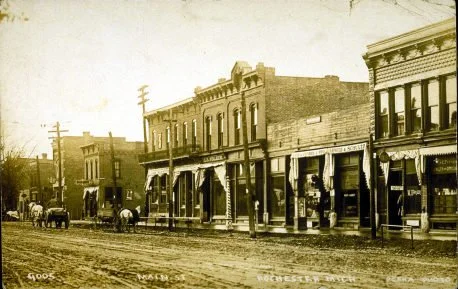
Chris Brown is a local historian with a passionate interest in 19th-century and Civil War era Rochester and Avon. Chris has organized and guided tours of Downtown Rochester, MI, including tours of Mount Avon Cemetery and Ghost Tours by Downtown Tarot Company. He has presented widely on local history, blending real historical accounts with ghostly encounters, local businesses, and homes.
An Interview with Chris
On ghost stories, Michigan history, and local legends
The Avon Review (TAR): What first drew you to the history of Rochester and Avon Township?
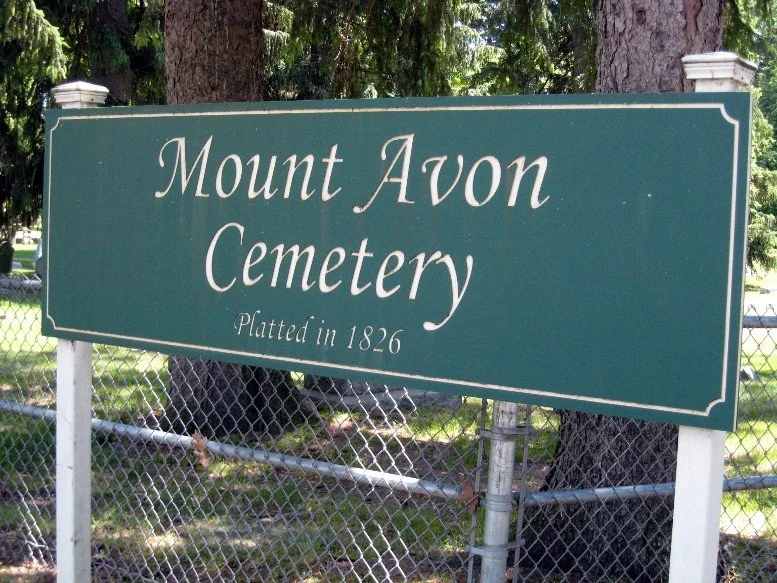
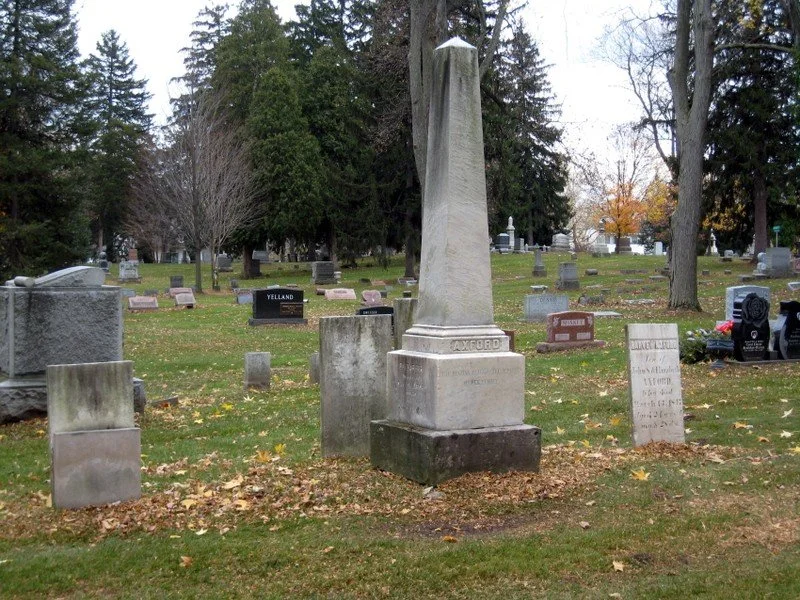
Chris Brown (CB): I have always had an obsession with the past. I really did not dive too deep into Rochester/Avon history until around the time of the COVID pandemic. I would go to Rochester’s old Mount Avon Cemetery as a way to get out of the house when the world was locked down. I always joked it was the only place in town where I could stay six feet away from people, living or dead. In doing this, I went out of my way to try to find all of the town’s Civil War burials, which led into a deep dive of their stories, wartime experiences, and their home life back in Avon. This led me down endless rabbit holes which eventually led to a pretty good understanding of what this town was like both during the Civil War and in the decades before and after the conflict.
TAR: Is there a particular place in Rochester or Avon that you feel especially drawn to? Why?
CB: If there is a singular place, it would be Mount Avon. To stand in the Old Ground there is to stand among an entire generation of Rochesterites who came here from somewhere out east when this area was little more than a wilderness, still inhabited by Native Americans. My research has also led to an understanding of their experiences in ways that only that level of research can do. I sometimes feel like I personally know some of these people, and many of them died well over a century before I was even born. I have also felt a certain attachment to the area of the southwest and northeast corners of Walton and Old Perch. That place has been all developed today by houses and a bank, but it used to be the site of the old Manwaring farm at the time of the Civil War. Two of the men living on the farm ended up serving in the war in different regiments and both of them ended up in the horrific rebel prison camp at Andersonville, Georgia. They both died in the camp and are still buried in the Georgia clay to this day, just a stones throw from each other.
They left young kids and wives back in Avon on the farm. It was one the first “wow” discoveries I made during the early days of my research on Rochester/Avon. I had to a chance to visit the prison site on a drive down to Disney World a few years ago and stopped at their graves. It felt like a little piece of Avon that had been ripped away by the circumstances of the time.
TAR: You've explored everything from local Rochester history to the Civil War and all kinds of other historical subjects. What is it about history that keeps pulling you from one story to the next?
CB: It truly is a passion. Think of those people that buy season tickets to the Lions every year despite the fact they have never really been able to win anything. They do it because they love it. That’s me, but with history. The nineteenth century has always been the main draw, and the decades surrounding the Civil War. There is a certain satisfaction to uncovering the stories as well, and it seems almost everyone has a story. Digging through old newspapers online, you never know what you will uncover. War stories, murders, crazy accidents. We have people in Mount Avon that stood in the presence of George Washington, Abraham Lincoln, even Napoleon. A niece of a signer of the Declaration of Independence is in there. One of Henry David Thoreau’s best friends is buried nearby. I always tell people to think of your own life and think of the highlights you would tell if you had to write your own story. The people you met, the situations you found yourself in, and the moments that really set you apart. The love, the loss, the excitement, the tragedy. That happened to all of those people too, just in a different context and setting. Imagine living in a world without electricity or the benefits of modern medicine. It is almost survivalist compared to life today. History is way cooler than a lot of people think.
TAR: What is the strangest story you've encountered in your research into Rochester and Avon?
CB: There are a few, but the stories of School Road probably lead the pack. It is featured on my ghost tours and will be featured in the accompanying book. The short of it, in 1906, a farmer named Clarence Barnum, who lived on School Road, murdered his entire family (wife and two kids) with an ax. He then took his own life. This was national news that made it into newspapers all over the country. It was basically the Lizzie Borden murders without the big East Coast money family. The farm then passed to the Tessmer family. His son accidentally shot himself while out hunting near the farm and died. Another gruesome triple homicide happened almost immediately across the street in the 1980s. And there are a series of other strange deaths and happenings in that area. I call it the “Cursed Road.” But perhaps the most interesting part of it is that in the 1950s and 1960s, after much of the Barnum-Tessmer property had been turned into a gravel mining operation, workers started digging up human skeletons. An archaeological study was done on the site and the remains of 113 ancient indigenous peoples were uncovered. It was believed there may have been as many as 500 before the gravel operations disturbed the site. These were graves that had been there for centuries. It takes the whole “Indian Burial Ground” legend to a whole other level when you factor in all the tragedy of the property.
TAR: Are there particular locations around Rochester that have accumulated multiple ghost stories over the years?
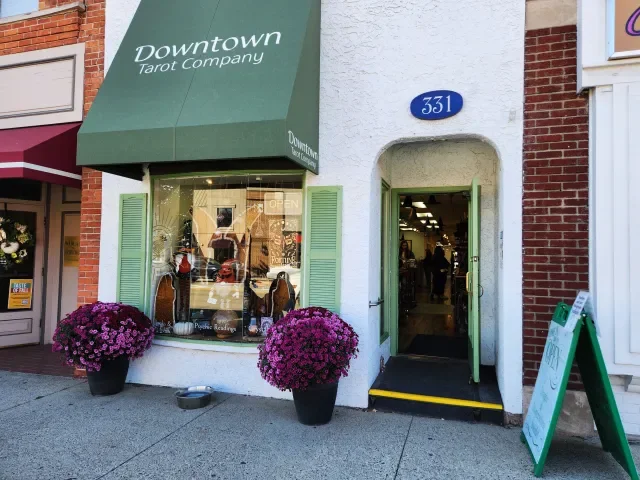
CB: The Downtown Tarot Company building has some great stories about a ghost they call Paul. We think he was a foundry-worker named Paul Wachtmeister who used to come here after work in the early 1900s when the shop was a cigar store. There is security camera footage of items flying off of shelves, staff have heard footsteps and weird noises. A woman on one of my tours saw a wisp of smoke in the front window of the shop one night after close.
The owners’ daughter even saw him in a downstairs mirror. I have no doubt that building is haunted. A couple of the mediums from Downtown Tarot have told me about how the trail to the south of town really gives them the creeps. That area is also heavy in Native American history so that does not necessarily surprise me. I think a certain close-mindedness to ghosts and the paranormal can make it difficult to get the full picture sometimes but there are a lot of ghosts in this town.
TAR: What do you think draws people to stories about ghosts and haunted places?
CB: It’s the unknown and probably the ultimate question in life. That being “what happens after we die?” Religious beliefs tell us certain “facts” but at the end of the day, most of us really do not know the full picture of it. Some love ghosts for the creepy factor, but for me, the idea of potentially connecting to the past in some metaphysical way, is really exciting stuff. I have been to plenty of historic sites and battlefields where I can genuinely “feel” the history. I never actually saw a ghost at those sites but there is an invisible thickness to the air. The way I have interpreted the paranormal is in understanding. We, as humans, may think we know everything, but I guarantee you we do not. Imagine talking to a mouse and trying to get him to understand how the 1984 Detroit Tigers won the World Series. You simply couldn’t. You probably couldn’t get him to understand what 1984 is, much less the intricacies of baseball. The afterlife could be our version of what the 1984 Detroit Tigers are to a mouse. Ghosts may be a breakthrough in that understanding, or not. But either way, that fringe science will always be cool.
TAR: What drew you specifically to the history of the Civil War in Michigan?
CB: The Civil War has been a learned interest since I was a kid. I took a tour of the Gettysburg battlefield when I was maybe ten years old with my parents and that really kick started it. The guide drove our car around for three hours and told us more fascinating human-interest stories than I could shake a stick at. That battlefield is really where it all began. I have the paranormal to thank for some of it too. After that first visit, a couple of my aunts took me back and we did the famed “Ghosts of Gettysburg” tours. I also consumed Mark Nesbitt’s books. While many books on the war go in to the intricacies of combat and troop movements (which I appreciate today), Nesbitt keyed in on the human element. Houses that were overtaken as field hospitals with piles amputated limbs outside of them. Families hiding in basements while the war raged outside. It really brought the brutality of it all to life. He is a storyteller. Most Civil War historians would call me crazy for that take but I stand by it. After Gettysburg, it became a quest to visit as many battlefields as I possibly could, and we did a ton of them through the years. I read as much as I could, collected artifacts, it became a bit of an obsession. That interest became more localized to Michigan as I got older and found the war is more interesting when it can be connected to local buildings and homes and cemeteries and your own backyard.
TAR: When you're studying something as enormous as the Civil War, how do you find the smaller, human stories that can sometimes get lost in the bigger history?
CB: That is really where it becomes interesting because at that point it isn’t just about a random regiment or big-wig general, it is about the bigger picture and it makes it much more personal. The stories come from piecing together old newspaper articles, census records, old plat maps, localized historical sources, memoirs, letters, regimental histories, muster rolls and monthly returns. You can gradually figure out who these soldiers were before and after the war, as well as what their wartime experiences would have looked like. Believe it or not, there aren’t many places in Rochester or Rochester Hills that do not have some connection to the war. An example is the area near where I live today. Not many people that stop for gas at the Speedway at Rochester and Avon Roads realize that where that gas station is, and the surrounding shopping plaza, was once one of the most beautiful farms in Rochester. John Snook owned an extensive fruit farm there after the war known as the Overlook Farm. It was said on dark nights you could see the new electric lights of Detroit there back in the early 1900s. Snook served with the 22nd Michigan Infantry during the Civil War and was wounded at Chickamauga when a shell fragment ricocheted off of his chest. His brother died of disease while serving a few months later. Snook went on to write poetry and became very involved in post-war reunions and the GAR. The aforementioned Manwaring farm is another example. Imagine the family getting the news, right there on Walton, that their son and son-in-law weren’t coming home from Georgia. It becomes very personal. But those are the kind of stories that make the war real and bring it closer to home.
TAR: What made you want to start doing history talks and tours?
CB: It was a chance to share my passion. I love talking about history, but not nearly as many people share my love for the past. By doing these talks and tours, it gives me a chance to be in similar company. There is also the element of historical preservation. So many historic homes have been torn down in Rochester and Rochester Hills over the past few years, often in the name of building some new McMansion. There was a home at Livernois and Hamlin that was brought down a few years ago that was one of the oldest houses in the community, built in the 1830s if not earlier. Oscar Adams, a son of the owner who would have grown up in the house, died fighting with Custer during the Civil War at a battle referred to as “Custer’s First Last Stand.” It was a disaster. But very few people had any idea of that history and I am not sure I ever saw one complaint about the house being torn down, even on social media. There was a home on Third Street that was torn down a few years ago as well that I still feature on some of my ghost tours. It was owned, during the Civil War, by a distant relative of Taylor Swift named Morrison Swift. When his wife died in the home, her funeral was held in conjunction with her daughter’s wedding. The family literally had the wedding in the parlor with the coffin set out right there. Those walls where that happened are now gone forever. Non-history lovers will argue it doesn’t really matter, but I feel like those old houses and structures are the architectural soul of the community.
TAR: What do you hope people take away from one of your history tours?
CB: I would love to give you the cliche answer about how if we don’t learn history we are doomed to repeat it. But really I just want people to enjoy the past. I hope to tell the stories in a way that makes people view our area a little differently. With younger folks, the goal is to inspire them to have a lifelong appreciation for history. The way that tour guide did for me in Gettysburg all those years ago. There are so many stories, even in our little community, that are just worth telling. I think it’s worth making the effort to keep those alive.